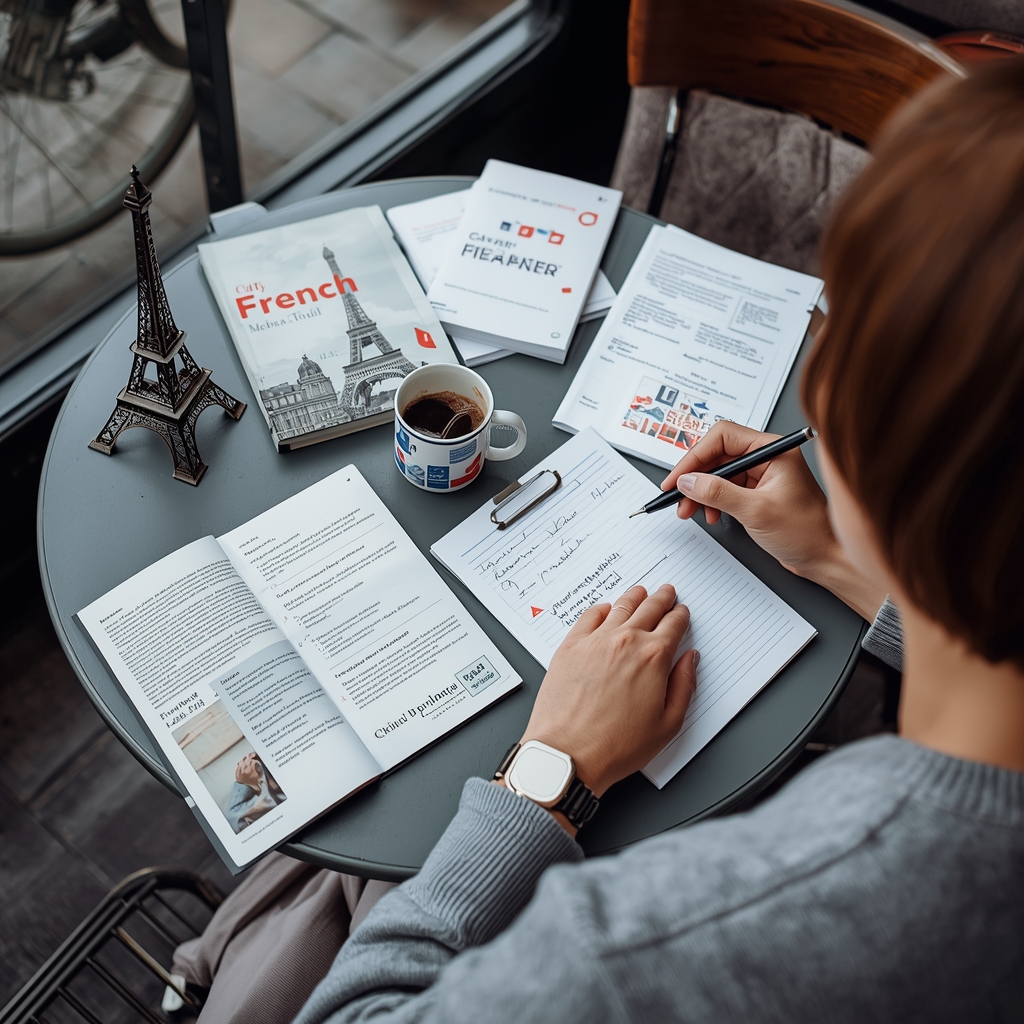
Choosing the right learning material is the first and most important step when you want to learn French by yourself. 📖
The books you use will directly impact your motivation, progress, and long-term success.
To help you avoid wasting time on inefficient resources, this article presents the best French learning ressources—carefully selected, internationally recognised French learning books that are suitable for self-study, from beginner to intermediate level.
Whether your goal is to understand grammar ✍️, build vocabulary 🧠, or gain confidence speaking 🗣️, these self-learning French books will help you learn more efficiently and with clarity.
📚 Why Books Are Still Among the Best French Learning Ressources
Despite the explosion of language apps and digital tools 📱, books remain one of the most effective French learning ressources, especially for beginner and intermediate learners.
Research in education and cognitive learning consistently shows that:
-
✍️ Reading and writing lead to better long-term retention than passive exposure
-
🧩 Structured materials improve consistency and progression
-
🔁 Active engagement (doing exercises, correcting mistakes) strengthens learning
Apps, videos, podcasts, and AI tools are valuable—but they work best as supporting resources, particularly for:
-
🎧 Listening comprehension
-
🗣️ Pronunciation exposure
-
🌍 Cultural immersion
-
🔥 Motivation
However, these tools are often secondary because they:
-
❌ Rarely offer a clear progression
-
❌ Don’t explain grammar in depth
-
❌ Encourage passive consumption rather than active use
👉 In short, the most efficient learners use books as the foundation, and digital tools as reinforcement.
🎯 How to Choose the Right French Learning Book for self-study
Instead of choosing a book only based on level or popularity, consider these less obvious but very reliable criteria:
1️⃣ Choose a Book That Slightly Challenges You
A good book should not feel completely easy. A small amount of difficulty signals progress and keeps your brain engaged 🧠.
2️⃣ Focus on Exercise Quality
Explanations are useful, but exercises matter more. Good exercises force you to produce language, make mistakes, and actively recall information ✍️.
3️⃣ Avoid “All-in-One” Promises
No single book can teach grammar, vocabulary, conversation, pronunciation, and culture perfectly. Real progress comes from combining complementary resources 🧩.
1️⃣ Alter Ego+ (Hachette FLE)
Level: A1–B1
Best for: Structured progression and communication
One of the most widely used textbooks in French language schools worldwide. While designed for classrooms, it also works well for motivated self-learners.
Why it works:
-
🗨️ Real-life dialogues
-
📐 CEFR-aligned structure
-
✍️ Grammar in context
-
🇫🇷 Cultural insights
2️⃣ Grammaire Progressive du Français (CLE International)
Level: A1–C1
Best for: Grammar clarity
A classic and trusted grammar reference used by teachers worldwide.
Why it works:
-
✔️ Clear explanations
-
✔️ One concept per lesson
-
✔️ Immediate practice
-
✔️ Answer key included
👉 See also: French grammar explained
3️⃣ Practice Makes Perfect: Complete French Grammar
Level: A1–B1
Best for: English speakers learning independently
Clear explanations in English with hundreds of exercises—ideal if you want to learn French by yourself 📘.
4️⃣ Easy French Step-by-Step – Myrna Bell Rochester
Level: Beginner to Intermediate
Best for: Logical progression
Perfect for absolute beginners who want reassurance and structure 🧱.
5️⃣ Cosmopolite (Hachette FLE)
Level: A1–B1
Best for: Modern French and communication
A contemporary, internationally recognised method focused on real-world language use 🌍.
6️⃣ Mastering French Vocabulary: A Thematic Approach
Authors: Wolfgang Fischer & Anne-Marie Plouhinec
Edition: 2nd Edition
Level: A2–B1
Best for: Vocabulary in context
One of the most effective vocabulary books for self-learners. Vocabulary is organised by real-life themes such as daily routines, emotions, travel, and communication.
Why this book stands out:
-
🧠 Vocabulary learned in context
-
🗂️ Thematic organisation
-
📝 Example sentences for natural usage
-
🗣️ Ideal for speaking confidence
7️⃣ Assimil – French With Ease
Level: A1–B1
Best for: Natural exposure and listening
Short daily lessons combining dialogues, grammar, and vocabulary in context 🎧.
8️⃣ Communication Progressive du Français
Level: A1–B1
Best for: Speaking and interaction
Excellent for learners who understand grammar but struggle to speak naturally 🗣️.
9️⃣ French Grammar Drills – Eliane Kurbegov
Edition: 4th Edition
Level: Beginner to Intermediate
Best for: Intensive practice
This book focuses on active production, with hundreds of targeted exercises designed to transform passive knowledge into usable skills.
Why it’s powerful:
-
🔁 High repetition
-
🧠 Active recall
-
📈 Clear progression
-
🎯 Ideal for self-learners
🔟 Short French Stories for Beginners
Level: A2–B1
Best for: Reading confidence
Reading short, adapted stories helps you internalise grammar and vocabulary naturally 📖.
💡 How to Use French Learning Books Better
-
🔁 Study the same page for several days instead of rushing forward
-
👀 Read exercise instructions carefully—they are authentic French
-
🗣️ Turn written exercises into speaking practice
-
⚖️ Use one book below your level for confidence and one above for progress
✅ Conclusion: The Best French Learning Ressources Are the Ones You Use Consistently
There is no perfect book—but there is a perfect combination for you. By mixing a grammar book, a vocabulary or communication book, and a practice or reading resource, you create a powerful self-learning system 🧩.
Books remain the most reliable foundation if you want to learn French by yourself efficiently and sustainably 📚.
❓ FAQ – Best Books to Learn French
What are the best French learning ressources for beginners?
Structured grammar books, thematic vocabulary books, and beginner-friendly reading resources are the most effective starting point.
Can I really learn French by myself using books?
Yes. Many learners successfully learn French independently with high-quality books, especially when they study regularly and combine different types of resources.
Are French learning books better than apps?
Books provide structure and depth, while apps work best as complementary tools for listening and motivation.
How many French learning books should I use at the same time?
Two or three books are ideal: one grammar book, one vocabulary or communication book, and one practice or reading resource.
👉 Subscribe to the blog for weekly French learning tips 💌